.png?width=44&height=44&name=joomag%20favicon-blue%20(2).png)
Before you write a single headline or pick a single font, you need a blueprint. A great digital magazine isn't just a collection of articles thrown together; it's a focused product built on a deep understanding of who it's for and what it's trying to achieve.
Honestly, this strategic groundwork is what separates successful publications from the ones that fizzle out after a few issues.
The digital publishing world is booming. The global market is projected to hit a staggering $1.9 trillion by 2030, growing at a compound rate of 12.8% annually. This isn't just a trend; it's a fundamental shift in how people consume content, opening up huge opportunities. You can dig into more publishing industry trends on lineup.com.
Laying the Groundwork for Your Digital Magazine
So, where do you start? Let's walk through the three pillars that will support everything else you do.
Find Your Niche and Define Your Audience
You absolutely cannot be everything to everyone. It's a trap. The most successful online magazines I've seen all have one thing in common: they target a specific, well-defined audience with a unique point of view. Trying to appeal to a broad market is a recipe for bland content that doesn't excite anyone.
Instead, find a niche you're genuinely passionate about and one that has an audience that's being overlooked. Ask yourself these questions:
- Who is my ideal reader? Get specific. Don't just stop at demographics. What are their job titles? What keeps them up at night? What are their biggest goals and personal interests?
- What problems can I solve for them? Your content has to deliver real value. That could be through expert advice, breaking industry news, or just pure inspiration.
- What's the competition doing? Scope out other publications in your space. Look for their strengths, but more importantly, their weaknesses and any content gaps you can swoop in and fill.
For instance, a magazine for "B2B SaaS marketers" is a decent start. But "A magazine for product marketers at early-stage FinTech startups"? That's gold. That level of focus lets you create hyper-relevant content that builds a fiercely loyal readership.
Establish a Strong Brand Identity
Your brand is so much more than just a logo and a color palette. It’s the entire personality of your publication—the voice, the tone, and the visual style that come together to create a consistent, recognizable experience for your readers. A strong brand builds trust and makes your magazine unforgettable.
This identity should touch every single part of your publication. A magazine for creative professionals might rock a bold, artistic look with a witty, conversational tone. On the flip side, a publication for financial analysts would likely go for a more formal, data-driven feel.
This simple flow chart breaks it down: it all starts with your niche, which informs your brand, which in turn helps define your goals.
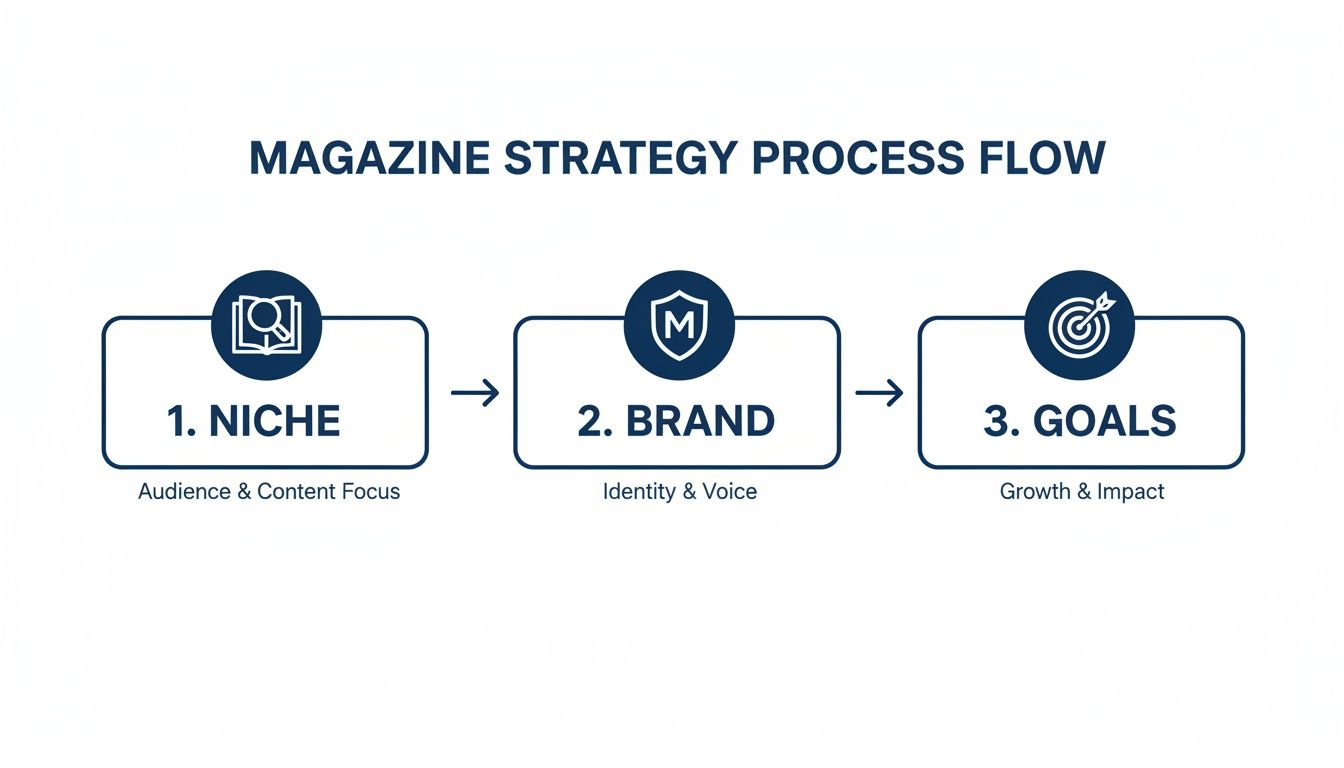
Following this strategic flow ensures every decision—from content to design—is anchored to a clear purpose.
Set Clear Goals and KPIs
Last but definitely not least, you have to define what success actually looks like. Are you trying to generate leads for a business? Build brand awareness? Or create a new revenue stream? Your answer will shape your content strategy, promotion, and monetization model.
Your goals dictate your metrics. Without clear Key Performance Indicators (KPIs), you're just creating content in a vacuum, hoping something sticks. Measurement is what turns a creative project into a business asset.
Once you know your primary goal, pin down the specific KPIs you'll use to track your progress. Here are a few examples:
- Lead Generation: Number of demo requests, content downloads, or new MQLs (marketing qualified leads).
- Brand Awareness: Total readership per issue, social media shares, or brand mentions across the web.
- Revenue: Subscription sales, advertising income, or affiliate commissions.
To help you organize your thoughts, here’s a quick-reference table covering the essential pillars of your strategy.
Core Components of a Magazine Strategy
This table provides a simple checklist to ensure you've covered your strategic bases before diving into production.
| Strategic Pillar | Key Questions to Answer | Example Goal |
|---|---|---|
| Niche & Audience | Who is our ideal reader? What are their biggest challenges and interests? What unique value can we offer them? | Become the #1 resource for product marketers in early-stage FinTech startups. |
| Brand Identity | What is our magazine's personality (e.g., witty, authoritative, inspirational)? What is our core voice and tone? | Develop a visually bold and editorially sharp brand that feels both aspirational and accessible. |
| Business Goals | What is the primary purpose of this magazine (e.g., lead gen, revenue, awareness)? What KPIs will measure success? | Generate 50 new MQLs per month from content downloads and form submissions within the magazine. |
Defining these elements from day one ensures you can measure what truly matters and make smart, data-driven decisions to grow your online magazine effectively.
Designing an Engaging Interactive Publication
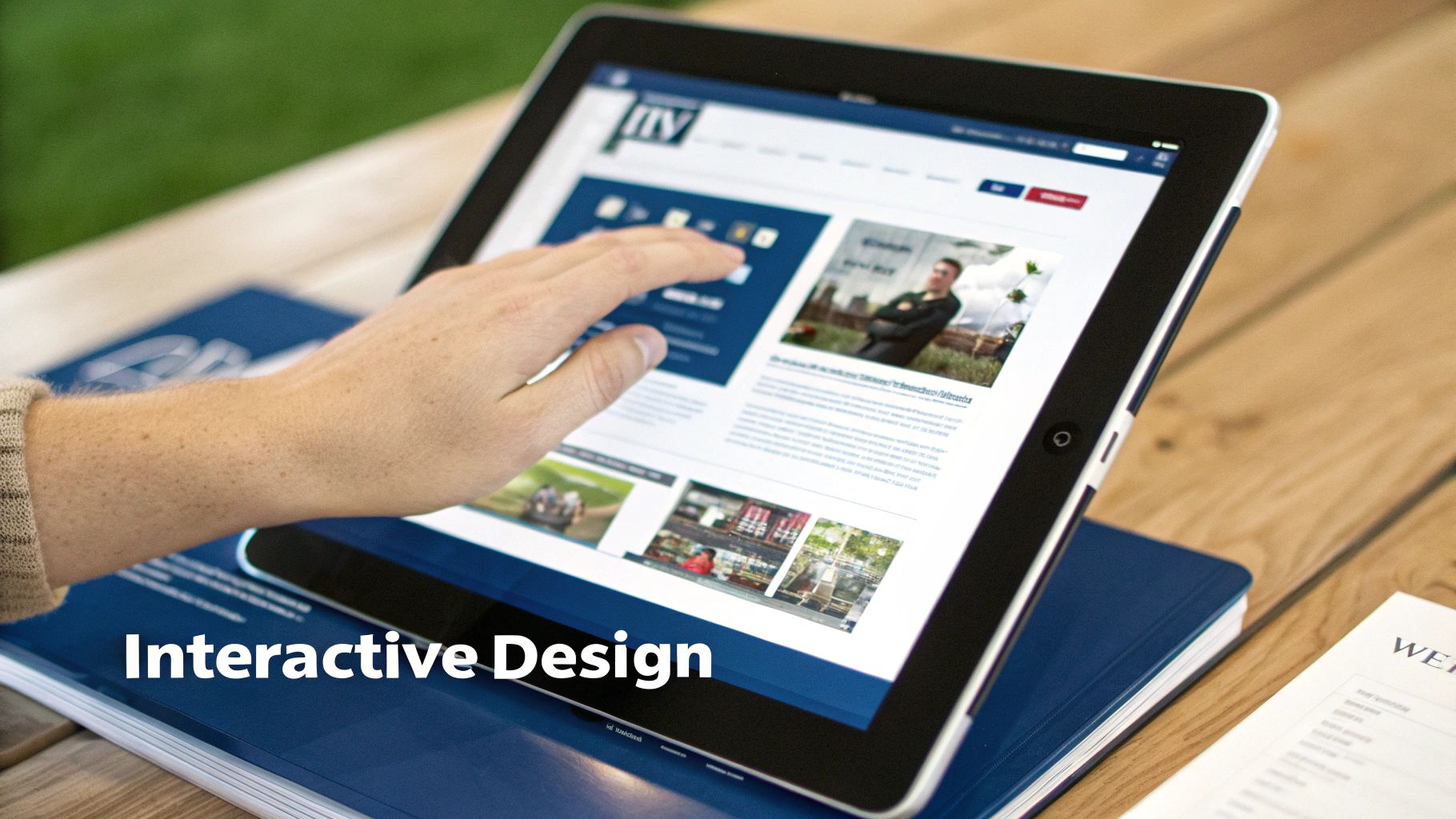
This is where the magic happens—where your strategy turns into a tangible, captivating experience for your audience. Let’s be honest, moving beyond static PDFs isn't just an option anymore; it's a flat-out necessity. The goal is to build an interactive online magazine that not only looks incredible but pulls readers in and keeps them clicking.
The first big decision you'll make is picking the right digital publishing platform. This choice dictates everything: your creative freedom, how efficiently your team can work, and your ability to actually measure success. Don't get bogged down by a long list of shiny features. Instead, zero in on what will directly improve your reader's experience and help you hit your business goals.
Choosing the Right Digital Publishing Platform
When you're sizing up your options, think holistically. You need more than just a slick design tool. A truly powerful platform should bundle user-friendly creation tools with robust distribution and analytics features, letting you manage your publication’s entire lifecycle from a single dashboard.
Here are the non-negotiables to look for:
- Intuitive, Template-Driven Design Tools: A drag-and-drop editor is non-negotiable. It empowers your entire team—not just designers—to layer in interactive elements without touching code. For example, Joomag’s Creative Studio provides reusable template blocks you design once and repurpose across future issues, cutting production time from days or weeks down to just a few hours.
- Article Creation Tool: After you upload your PDF, it’s essential to generate an HTML Article View for each piece. This dramatically improves the reading experience, supports accessible, ADA/WCAG-aligned consumption, and strengthens SEO + LLM discoverability so your articles can be properly indexed and surfaced by search engines and AI systems.
- Rich Media Support: Your platform has to handle native animations, video embeds, audio clips, and high-res photo galleries without breaking a sweat. These are the elements that create a truly dynamic experience.
- Built-in Analytics: You can’t optimize what you can’t measure. Prioritize platforms that provide a complete analytics picture—page views, time on page, scroll depth, and click-through rates on every interactive element. Granular, reader-level insights are crucial: you can see who’s actively engaging and who’s dropping off, run targeted campaigns for highly engaged readers, and launch re-engagement workflows for inactive subscribers. With this visibility, you can spot potential churn risks early and intervene before a reader cancels their subscription.

A modern platform should give you both creative freedom and the data-driven insights you need to make content that genuinely performs.
Embedding Interactive Features That Boost Engagement
Interactivity is what separates a living, breathing digital magazine from a flat, lifeless document. It’s your chance to have a two-way conversation with your readers instead of just talking at them. By embedding smart, purposeful interactive elements, you can guide them toward key actions and watch your engagement numbers soar.
Think about incorporating these high-impact features:
- Clickable Links and CTAs: Seamlessly guide readers to other relevant articles, product pages, or your main website. Use clear, action-oriented calls-to-action (CTAs) to drive traffic exactly where you want it.
- Embedded Videos: Why just describe a new product when you can show it in action? Product demos, customer testimonials, and behind-the-scenes clips bring your stories to life in a way text never could.
- Lead Capture Forms: Place a simple form in front of a high-value article or an entire issue to generate qualified leads right inside your publication. This turns your magazine into a powerful demand-gen tool.
Interactivity should never feel like a gimmick. Every link, video, or pop-up needs a clear purpose—either to deepen the reader's understanding or to move them one step closer to a business goal.
To get a feel for what’s possible, take a look at the different types of interactive digital publications that modern platforms can produce. It’s a great way to get inspired and see how these features work in the wild.
Adopting a Mobile-First Design Mindset

A stunning magazine that’s impossible to read on a smartphone is a failed magazine. Period. Today, a mobile-first design isn’t just a good idea—it’s the only way to go. The simple reality is that most of your audience will discover and consume your content on their phones.
The data backs this up. The majority of traffic and spending for digital publications now happens on mobile. Yet, so many publishers are still forcing readers into a frustrating pinch-and-zoom nightmare. To win, you have to embrace reflowable formats that adapt perfectly to any screen size.
A true mobile-first approach means your content is:
- Readable: Text is big enough to read comfortably, and columns reflow into a single, easy-to-scroll format.
- Navigable: Buttons and links are designed for thumbs, not mouse pointers.
- Fast: Pages and media load quickly, even if the reader is on a spotty connection.
When you nail these design principles, you guarantee a seamless and enjoyable reading experience. That’s the foundation for building the loyal, engaged audience your new online magazine deserves.
Building Your Content Creation Workflow
A killer design is just the vessel. The real lifeblood of any online magazine that people actually want to read is consistently great content. Without a solid process, even the most brilliant teams will eventually hit a wall of missed deadlines, spotty quality, and straight-up burnout.
Building an efficient workflow is how you turn a cool creative idea into a sustainable, scalable publication. It’s the operational backbone that keeps everything running, ensuring every single piece of content—from a deep-dive feature to a tiny sidebar—lines up with your brand and your goals. Let's get into how to build a system that just works.
Map Out Your Editorial Calendar
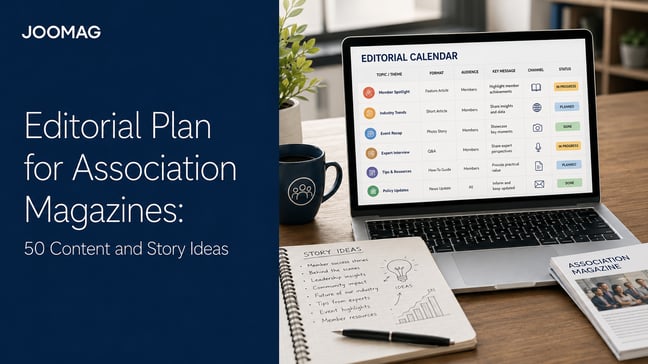
Your editorial calendar is your command center, your single source of truth. It’s way more than just a list of due dates; think of it as a strategic map that connects your content directly to your audience's world and your business objectives. Start big by outlining major themes for each issue or month, then drill down into specific article topics that fit.
For instance, a B2B marketing magazine might dedicate an entire issue to "Account-Based Marketing." Under that theme, you could plan out a whole ecosystem of content:
- An expert interview with a well-known ABM leader.
- A case study breaking down a wildly successful ABM campaign.
- A tactical guide to choosing the right ABM software.
- An opinion piece on where personalized marketing is headed next.
This thematic approach makes for a much more cohesive reading experience. It feels intentional. Use a project management tool like Trello, Asana, or even a well-organized shared spreadsheet to keep tabs on topics, assignments, deadlines, and publish dates.
Sourcing and Briefing Content Creators
Whether you’re working with your in-house team, tapping into a network of freelancers, or bringing in guest experts, a crystal-clear content brief is non-negotiable. Seriously. It's the single best tool you have to prevent those painful, endless revision cycles and make sure every article hits the mark right from the first draft.
A great brief doesn't just explain the what (the topic); it communicates the why. It nails down who the reader is, the article's core purpose, the exact tone of voice, and the key takeaways you want people to walk away with.
Your brief should always cover these bases:
- Target Audience: A quick snapshot of who you're talking to (e.g., "Product marketers at early-stage FinTech startups").
- Core Angle: What's the unique perspective or argument of this piece?
- Key Talking Points: List 3-5 must-cover points for the article.
- SEO Keywords: Primary and secondary keywords to weave in naturally.
- Tone of Voice: A few adjectives to guide the style (e.g., "Authoritative but conversational").
- Deadline and Word Count: The practical stuff.
Giving your creators this level of detail up front empowers them to deliver exactly what you're picturing, saving everyone a ton of time and headaches.
Streamlining the Editorial and Approval Process
Once that first draft lands in your inbox, the editorial gears start turning. This workflow usually has a few stages, and defining them from the get-go is key to keeping things from getting stuck in limbo.
A typical editorial flow might look like this:
- First Draft Submission: The writer hands off their initial draft.
- Editorial Review: An editor goes through it for structure, clarity, and how well it matches the brief.
- Fact-Checking and Copyediting: A copyeditor polishes the piece, checking for accuracy, grammar, and style guide rules.
- Design Layout: The final, approved text gets dropped into the magazine layout using a platform's online editor. This is where visuals and interactive bits are added.
- Final Approval: A senior editor or key stakeholder gives the final thumbs-up before it goes live.
Using a digital publishing platform with built-in collaboration tools can be a total game-changer here. Look for features that let you set user roles and permissions. For example, you can give writers submission-only access, editors full editing rights, and stakeholders a view-only link for final approval. This keeps your brand governance tight and stops any accidental "oops" moments.
Repurposing Content to Maximize Your Investment
Let's be real: creating high-quality magazine content takes a lot of time, energy, and resources. Don't just publish an issue and let all that value disappear. A smart repurposing strategy can breathe new life into your best work and pull in new audiences from all over the place.
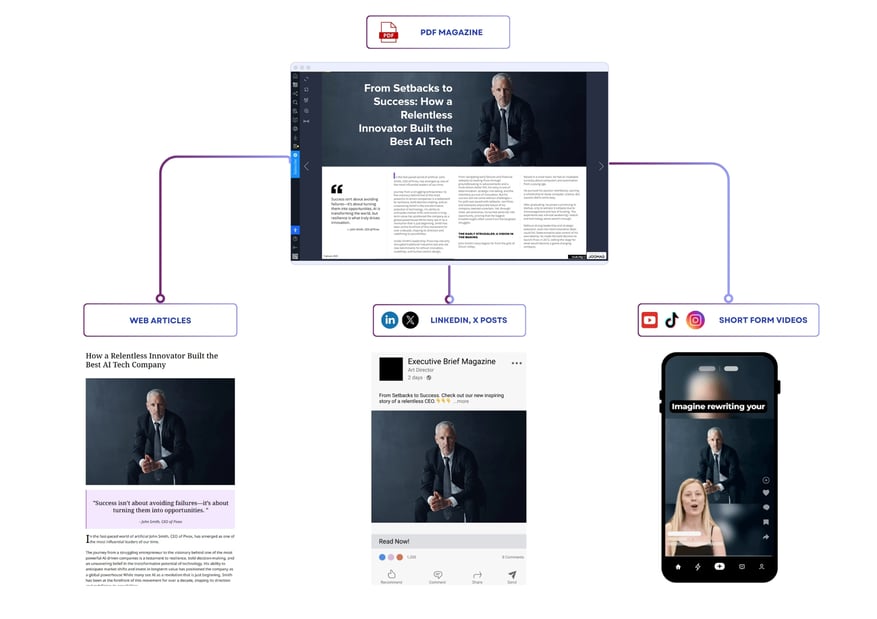
Think about how you can "atomize" a single feature article. One big, meaty piece can be sliced and diced into a bunch of other assets:
- A series of social media posts pulling out key quotes or stats.
- A short video script that summarizes the main points. Joomag's latest AI Video Shorts allows you to automatically turn your magazine articles into short form videos for social media platforms like Youtube, Tiktok and Instagram.
- An infographic that visualizes the data from the article.
- A standalone blog post on your website to catch that sweet search traffic.
This isn't just about filling your content calendar. It's about creating multiple doorways for new readers to find their way to your flagship publication. By putting these four pillars in place—a strategic calendar, clear briefs, a smooth workflow, and a savvy repurposing plan—you're not just making content. You're building an efficient engine that consistently delivers the kind of high-caliber material your audience is hungry for.
Promoting Your Magazine to Reach the Right Audience
You’ve built a stunning online magazine. It’s a huge accomplishment, but let's be honest, it's just the starting line. The most insightful articles and gorgeous designs in the world don't mean a thing if no one ever sees them. A smart, multi-channel promotion strategy is what turns your hard work from a well-kept secret into a must-read resource.
Think of your promotion plan as a series of invitations, each one written specifically for a different group of potential readers. The idea is to meet your audience where they already hang out and give them a compelling reason to check out your latest issue. This means coordinating your efforts across every channel you have access to.
Leverage Your Owned Channels for Direct Engagement
Your own channels—your email list and your website—are your most powerful promotional tools, hands down. These are people who already know you and trust your brand, making them the most likely to become your first and most loyal readers.
Start with email. But please, don't just send a bland "New issue is out!" blast. Build some anticipation with a teaser campaign that highlights your best content.
- Send a sneak peek of a cover story or a thought-provoking quote from an expert interview.
- Showcase the visual appeal with a striking image or a slick GIF from one of the articles.
- Create a sense of urgency by linking directly to a particularly high-value piece of content.
Your website is another piece of prime real estate. Embedding your magazine directly into your site isn't just nice to have; it's crucial for discoverability and pulling in organic traffic.
"Your website isn't just a place to host your magazine; it's a content hub that should actively guide visitors toward your publication. Strategic placement turns passive website visitors into engaged magazine readers."
Consider building out a dedicated resource hub where people can browse both current and past issues. This creates a valuable library of content and encourages readers to stick around longer. You can also embed the latest issue on relevant blog posts or high-traffic landing pages to catch their interest at just the right moment.
Atomize Your Content for Social Media
Social media is where you can break your magazine down into bite-sized, shareable pieces. This process, often called content atomization, is all about creating a bunch of smaller promotional assets from a single article. The goal is to give your followers a taste of the value inside, tempting them to click through for the full experience.
A single feature article can easily be repurposed into a whole week's worth of social content:
- Quote Graphics: Pull out the most impactful quotes and turn them into shareable images for platforms like LinkedIn or Instagram.
- Short-Form Video: Create a quick video summarizing the key takeaways from an article, perfect for TikTok or Instagram Reels.
- Data Snippets: If your article includes interesting statistics, share them as standalone posts to spark conversation and show off your expertise.
- Behind-the-Scenes Content: Share a quick story about how an interview or article came together. It adds a great human touch.
Each little piece of content should act as a breadcrumb leading followers back to the main publication. Always, always include a clear call-to-action and a direct link to the magazine.
Use Paid Strategies to Reach New Audiences
While organic promotion is essential for building a loyal community, paid advertising is how you scale your reach and connect with new, highly targeted audiences. Social media ad platforms, in particular, offer incredibly specific targeting options, letting you get your magazine in front of the exact people you defined in your initial strategy.
For example, you can target users based on:
- Job Titles and Industries: Perfect for B2B magazines aimed at specific professional roles.
- Interests and Behaviors: Ideal for consumer-focused publications.
- Lookalike Audiences: Upload your existing subscriber list to find new users with similar profiles.
You don't need a massive budget to get started. Begin with a smaller amount to test different ad creatives and audience segments. I recommend focusing on promoting your most compelling article or a gated issue to capture leads. By tracking conversions, you can quickly see what resonates and double down on the campaigns that deliver the best ROI, ensuring each issue builds momentum and grows your readership.
Distribution Channel Comparison
Choosing where to focus your promotional energy can be overwhelming. Not all channels are created equal, and the best fit depends entirely on your goals—whether you're trying to build brand awareness, drive direct engagement, or reach a completely new audience. This table breaks down the pros and cons to help you make smarter decisions.
| Channel | Primary Goal | Pros | Cons |
|---|---|---|---|
| Email Newsletter | Nurturing existing audience, driving repeat readership. | High engagement, direct line to your most loyal followers, full content control. | Limited to your existing list, potential for list fatigue if overused. |
| Website/Blog Embed | Increasing organic traffic (SEO), creating a content hub. | Boosts SEO, keeps traffic on your site, encourages browsing of back issues. | Relies on existing website traffic, requires technical setup. |
| Social Media | Brand awareness, reaching new audiences, community building. | High potential for virality, allows for content atomization, great for visual promotion. | Low organic reach (pay-to-play), requires constant content creation. |
| Paid Social Ads | Scaling reach, targeted lead generation, audience growth. | Precise targeting, measurable ROI, ability to test different messages and visuals. | Requires a budget, can be complex to manage, ad fatigue is real. |
Ultimately, a blended approach is almost always the right answer. Start with your owned channels, which offer the highest return for the least effort. Then, use social media to cast a wider net and experiment with paid ads to accelerate your growth and hit specific audience segments. By understanding what each channel does best, you can build a promotion engine that works for you.
Monetizing and Measuring Your Magazine's Performance
Creating a beautiful online magazine is a huge win, but let's be honest, the real work begins after you hit publish. To make sure your magazine has staying power, you need a smart plan for turning those eyeballs into actual business results.
Whether you're aiming for direct revenue or a pipeline full of qualified leads, this is the part where your content investment starts to pay off. We need to move past the old-school idea of just slapping ads on every page. Today’s digital publications have much smarter ways to create value, and the trick is picking the right one for your brand and your audience.

Choosing Your Monetization Model
The right approach here is all about your goals. If your magazine is a key piece of your marketing strategy, lead generation is probably your north star. If it’s a standalone media brand, then models like subscriptions will be your bread and butter.
Here are a few proven models I’ve seen work time and again:
- Subscriptions and Memberships: The classic for a reason. You offer exclusive, can't-get-it-anywhere-else content behind a paywall and build a predictable, recurring revenue stream. This is perfect once you've built a loyal following that trusts your unique point of view.
- Lead Generation Gating: This turns your magazine into a serious demand-gen machine. You can gate an entire issue or just a single, high-value piece (like a deep-dive research report) behind a simple contact form. You're trading premium content for a prospect's info, feeding your sales team directly.
- Branded or Sponsored Content: Team up with other respected, non-competing brands in your space to create sponsored articles or features. This can be a great revenue source, but transparency is everything. Always, always label sponsored content clearly to keep the trust you've built with your readers.
- Freemium Model: Give readers a taste of what you offer for free, but keep the best stuff for paying members. For instance, the latest issue might be free for everyone, but your entire back catalog of content is only for subscribers. It’s a great way to show off your quality and entice readers to upgrade.
Frankly, most successful magazines don't just pick one. They use a hybrid approach, mixing a couple of these strategies to create multiple streams of revenue and value.
Tracking Performance with Robust Analytics
You can't improve what you don't measure. Flying blind and just guessing what content is landing with your audience is a recipe for failure. Good analytics are the engine of improvement, giving you the insights to make smarter calls on everything from content and design to promotion.
"The most successful publishers are data-obsessed. They don't just look at vanity metrics; they dig deep into reader behavior to understand why certain content performs well and use those insights to replicate that success."
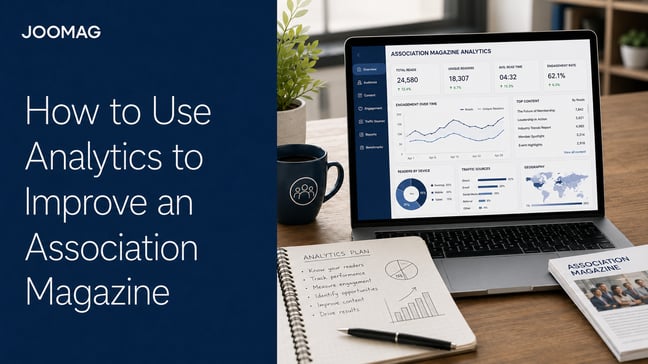
Your digital publishing platform should hand you detailed analytics that go way beyond simple page views. You need to get granular to really see the entire reader journey.
To figure out what’s truly working, you have to watch a specific set of key performance indicators (KPIs). These numbers give you a clear window into how people are actually interacting with your publication, page by page.
- Total Readers and New Readers: This is your baseline for audience growth over time.
- Average Read Time per Session: How long are people actually sticking around? A high average read time is a fantastic sign of engaging content.
- Page-Specific Dwell Time: Pinpoint your most compelling articles by seeing which pages hold readers' attention the longest.
- Click-Through Rates (CTRs) on Links and CTAs: Are people clicking your interactive elements? This is a direct measure of engagement and tells you if your calls to action are effective.
- Lead Form Submission Rate: If you’re gating content, this is your money metric. It tells you exactly how well your magazine is converting readers into leads.
By tracking these numbers consistently, you'll start seeing patterns emerge. Maybe you’ll notice that interviews always have the highest read time, which is a clear signal to do more of them. Or perhaps a specific CTA button has a terrible CTR, telling you it’s time for a design or copy refresh.
Diving into these numbers is non-negotiable. A great starting point is to understand the full capabilities of modern digital publishing analytics and what they can tell you about your readers. When you combine the right monetization strategy with a data-driven approach, your online magazine transforms from a creative project into a powerful, high-performing asset that delivers real business value.
Common Questions About Creating an Online Magazine
When you're mapping out the plan for your new online magazine, a few practical questions always seem to pop up. Trust me, I've heard them all. Getting these sorted out early on can save you a ton of time, budget, and headaches down the road.
Let's jump into the most common queries I see from teams just starting their digital publishing journey.
How Much Does It Cost to Start an Online Magazine?
This is the big one, and the honest answer is: it varies wildly. Your costs could be a few hundred dollars a month or climb into the tens of thousands. It really boils down to three main buckets: your publishing platform, content creation, and marketing.
A small team creating content in-house with an affordable platform can keep things lean. But if you're aiming for a large-scale publication with a dedicated staff of writers, designers, and a serious ad budget, the investment will naturally be much higher.
Here's a quick breakdown:
- Digital Publishing Platform: Subscriptions can run anywhere from under $100 to several thousand dollars a month. The price depends on what you need, like advanced interactivity, deep analytics, and the number of user seats.
- Content Creation: This is where you budget for your talent—the writers, designers, photographers, and editors who will bring your magazine to life.
- Marketing & Promotion: Don't forget to set aside a budget for getting the word out. Think social media ads, email marketing tools, and other activities to actually grow your audience.
What Is the Best Software for Creating a Digital Magazine?
The "best" software is the one that best fits your specific goals and workflow. If your team is focused on creating interactive experiences, generating leads, and tracking reader behavior, an all-in-one platform like Joomag is a fantastic choice. It bundles everything—design, distribution, and measurement—into one spot.
Now, if your primary need is just pure, complex graphic design, a tool like Adobe InDesign is a powerhouse. The catch? It doesn't have the built-in distribution, monetization, or analytics that are so critical for managing the entire lifecycle of a publication. You'd have to figure all that out separately.
"When you're weighing your options, think about ease of use, mobile performance, interactive features, and how deep the analytics go. The right tool empowers your whole team, not just the design pros."
How Do Online Magazines Make Money?
There isn't just one way to do it. In fact, most successful digital magazines I've seen use a hybrid approach to build out multiple revenue streams. It's smarter and more resilient.
The most common strategies are:
- Subscriptions: The classic model. Readers pay a recurring fee for access to your premium content.
- Advertising: Selling ad space within your publication to brands that make sense for your audience.
- Lead Generation: Using your magazine as a valuable, gated asset to capture contact information for your sales team.
- Branded Content: Partnering with brands to create sponsored articles or even entire issues.
Can I Convert a PDF into an Interactive Online Magazine?
Yes, absolutely! This is actually one of the most popular and efficient ways for teams to get started, especially if you already have existing print materials or static PDFs.
Most modern digital publishing platforms are built to make this process incredibly simple. You just upload your static PDF, and from there, you can use the platform's editor to layer on all sorts of engaging elements. Think embedded videos, clickable links, pop-up image galleries, or even lead-capture forms placed directly on the page. It’s the perfect way to transform a flat document into a dynamic experience without starting from scratch.
Ready to bring your vision to life? Joomag gives you all the tools you need to create, distribute, and measure stunning interactive content that gets real business results. Discover how our platform can help you build an online magazine that captivates your audience and smashes your goals.