.png?width=44&height=44&name=joomag%20favicon-blue%20(2).png)
.jpg?width=1312&height=736&name=article-image-5fd0f198-a3bc-488c-9743-b07f21d038ac%20(1).jpg)
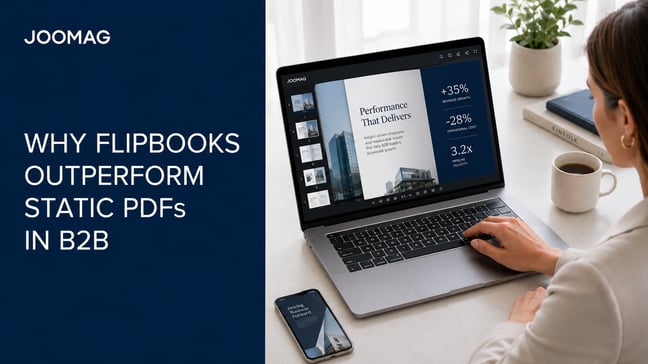
Let's be honest, we've all been there. You download a brochure, a report, or a catalog, and what you get is… a PDF. It’s basically a picture of a piece of paper. Flat. Lifeless. Static.
You can't click anything. You can't watch a video. And for the person who sent it, they have no idea if you even read past the first page. This is exactly the problem that digital edition software was built to solve.
At its core, this software is all about transforming those one-dimensional documents into living, breathing digital experiences that you can interact with and, just as importantly, measure.
From Static Page to Interactive Experience
Think about the difference between a photograph of a concert and actually being there. One is a flat snapshot; the other is a rich, multi-sensory experience. That’s the leap from a standard PDF to a digital edition.
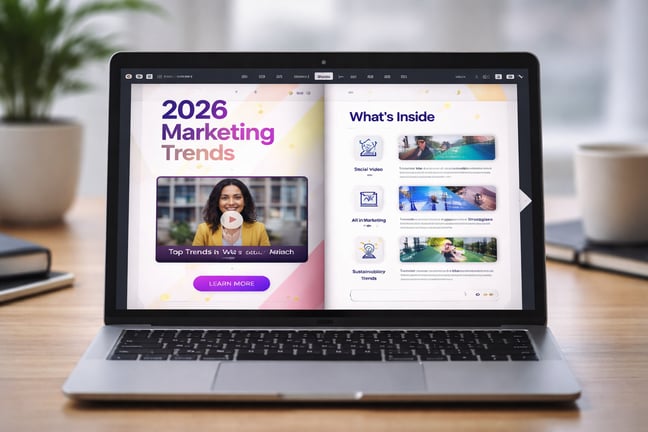
Digital edition software isn't just a fancy PDF viewer. It’s a completely different way of thinking about your content. It acts as a bridge, helping you move your static files into a dynamic world where they can adapt to any screen, engage readers, and provide you with crucial feedback.
It’s not just about digitizing your content; it’s about reimagining it.
The Problem With PDFs
The fundamental shift here is from passive consumption to active engagement. A PDF is a dead end—a final, unchangeable file that can't tell you a thing about its audience.
An interactive digital edition, on the other hand, starts a conversation. This is precisely why so many businesses are making the switch.
To see the difference clearly, let's break it down.
Static PDF vs Interactive Digital Edition
| Feature | Traditional PDF | Interactive Digital Edition |
|---|---|---|
| Reader Engagement | Passive reading, no interaction. | Active engagement with videos, pop-ups, and forms. |
| Mobile Experience | Awkward pinching and zooming on phones. | Fully responsive design that adapts to any screen. |
| Analytics | None. You only know if it was downloaded. | Detailed metrics on views, time on page, and link clicks. |
| Lead Generation | Impossible. A reader has to leave to contact you. | Built-in lead forms to capture information directly. |
| Updating Content | Requires re-creating and re-distributing the entire file. | Real-time updates can be pushed to all viewers instantly. |
| Navigation | Basic scrolling or jumping to a page number. | Clickable table of contents, embedded links, and pop-ups. |
As you can see, one is a relic of the print era, while the other is purpose-built for how we consume content today.
A Data-Driven Approach to Content
The real game-changer isn't just the flashy features; it's the data.
A digital edition isn’t just a document; it’s a data-gathering tool. It tells you which pages were viewed, how long readers stayed, and what content resonated most. That’s business intelligence you simply can’t get from a static file.
This need for smarter, more measurable content is fueling huge market growth. The global digital marketing software market, which includes these platforms, was valued at USD 75.34 billion in 2024. That figure is expected to skyrocket to USD 321.77 billion by 2033, according to full digital marketing software research from Grand View Research.
So, What Can You Actually Do With It?
Let's move past the theory. What does this look like in the real world? Imagine a sales proposal that does more than just list features and prices. With digital edition software, that same proposal can now:
- Embed video testimonials right on the page, letting prospects hear from happy customers without ever leaving the document.
- Include interactive pricing calculators so potential clients can configure a package that fits their budget on the spot.
- Link directly to product pages or checkout carts, collapsing the path from interest to purchase.
- Capture qualified leads with forms embedded right inside the content, turning your proposal into a powerful demand-gen tool.
This approach gives marketers, sales teams, and publishers content that truly works for them. A sales manager can see that a prospect spent ten minutes on the ROI page, giving them the perfect opening for a follow-up call. Internal comms can track which articles in the company newsletter are actually being read, helping them fine-tune their messaging.
Ultimately, this technology closes the loop between creating content and understanding its impact. You can explore how to build these assets in our guide on interactive digital publications to see how every document can become a source of valuable insight.
Core Features That Redefine Your Content
To really get what makes digital edition software special, you have to look past the long list of tools. It’s not about having more features; it’s about having the right ones that completely change how people experience your content.

Think of a static PDF as a silent film. It tells a story, sure, but it lacks sound, color, and action. The features below are what add the soundtrack and special effects, turning a passive viewing into an experience your audience can actually dive into.
Turn Passive Readers Into Active Participants
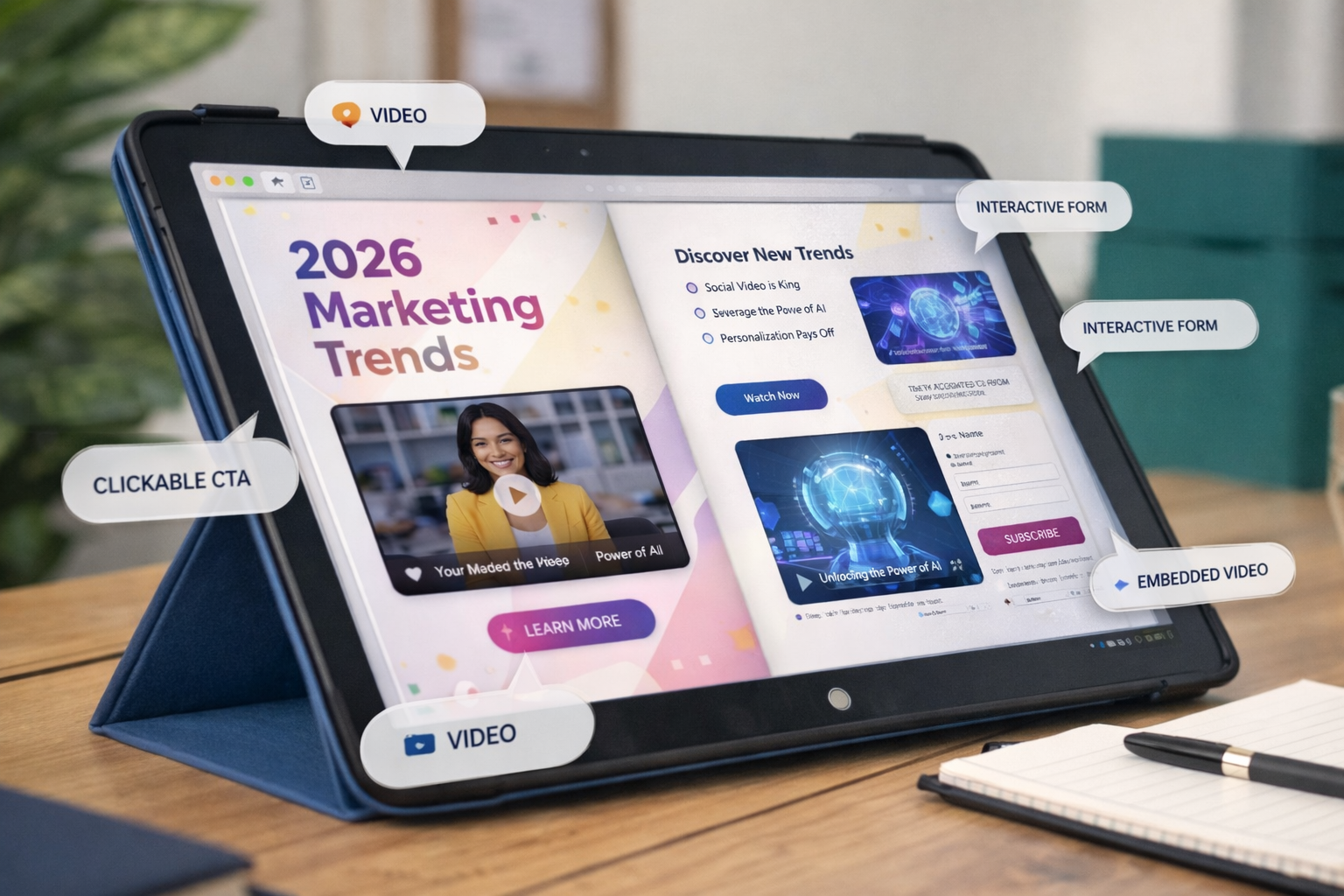
This is where your content stops being a monologue and starts a conversation. The biggest shift from old-school documents is the power to embed interactive elements directly onto the page, bringing everything to life.
- Embedded Media: Why tell when you can show? Place videos, audio clips, and animated GIFs right where they belong. A real estate brochure can feature a video walkthrough, or a sales proposal can open with a personal welcome from the CEO.
- Pop-up Forms and CTAs: Don’t force readers to open a new tab to take the next step. You can use pop-up lead forms, clickable “Buy Now” buttons, and survey widgets to turn their interest into instant action.
- Interactive Galleries: A flat grid of photos is a missed opportunity. Instead, create clickable photo galleries and product carousels that let people explore without ever leaving the page.
These tools transform your document from something to be read into something to be done. They invite people to participate, which makes the whole experience stick.
The goal is to eliminate friction. If a reader is interested, the path to conversion—whether it's signing up for a webinar or buying a product—should be right there in the document.
Flawless Viewing on Any Device
Let’s be clear: true mobile optimization is not optional. It’s not about just shrinking a desktop design to fit a phone, forcing your audience into that frustrating game of pinch-and-zoom.
Modern digital edition software creates a genuinely responsive design. It intelligently reformats your content—text, images, and all those interactive bells and whistles—to look perfect and read beautifully on any screen, from a wide monitor to a smartphone. This guarantees your work looks professional and is accessible to everyone.
This capability is part of a much bigger shift. In the industrial and specialized software world, these publishing tools are now essential for sales teams and media brands. The global industrial software market, which hit $146 billion in 2023, is expected to reach $355 billion by 2030, with cloud technology leading the charge. You can dive deeper into the industrial software market landscape from IoT Analytics.
Insights That Drive Strategy
This might be the most powerful part. A PDF tells you nothing about who read it or what they cared about. A digital edition, on the other hand, can track everything, giving you a clear window into reader behavior.
You can monitor metrics that actually matter, like:
- Page-Level Engagement: See exactly which pages people love and which ones they’re skipping over.
- Time Spent Reading: Know how long you’re holding their attention, both overall and on specific pages.
- Click-Through Rates: Track every single click on your links, videos, and pop-ups to learn what’s working.
- Reader Identification: If you connect it to your CRM or email platform, you can see which of your known prospects are engaging with your content.
For sales and marketing teams, this data is pure gold. Imagine your sales rep knowing a key prospect just spent 15 minutes on the pricing and case study sections of a proposal. That’s a huge advantage for the follow-up call. Many of these features are built into a quality online editor for digital content creation.
Strategic Use Cases Across Your Business
Knowing the features of digital edition software is a good start, but the real magic happens when you see how it actually moves the needle on business goals. This isn't just a niche tool for one team; it's more like a Swiss Army knife for your content.
For your marketing team, it’s a lead-gen powerhouse. For sales, it’s a shortcut to closing deals. And for publishers, it’s a whole new way to make money. Let’s dig into how different departments are using digital editions to get ahead.
Boosting Demand Generation and ABM
If you’re in B2B marketing, your world revolves around generating high-quality leads. The old way of doing this—gating a static PDF white paper—is full of friction. A prospect hands over their email for a document they haven't even seen, and you get a name with no idea what they're truly interested in.
Digital editions turn that entire process on its head.
Instead of a boring download, you can build an interactive white paper. Think about a report on industry trends that includes:
- Embedded video interviews with experts to build credibility and add a human touch.
- Clickable data visualizations that let people explore charts and graphs on their own terms.
- A lead form that appears on page five, right after a killer statistic, asking if they’d like a personalized demo.
One B2B tech company tried exactly this with a key white paper. By swapping their static PDF for a dynamic experience using digital edition software, they saw a 50% increase in marketing-qualified leads (MQLs) from that one piece of content. Their analytics showed that the best leads were spending most of their time on the case study and pricing pages, giving the sales team the perfect conversation starter.
This gets even more potent with an Account-Based Marketing (ABM) strategy. You can spin up a custom, interactive proposal for a major target account, packed with personalized videos and data that speaks directly to their business.
Accelerating the Sales Cycle
Sales teams are in a constant battle for a prospect's attention. A long, text-heavy proposal attached to an email is easily buried in a packed inbox—or worse, just plain ignored.
This is where dynamic proposals completely change the sales conversation. A sales team can use digital edition software to create proposals that practically sell themselves.
Imagine a sales rep sends a prospect a digital proposal that contains:
- A personalized video intro from the account executive right on the cover page.
- Embedded, clickable testimonials from happy clients in the prospect’s own industry.
- An interactive ROI calculator where the prospect can plug in their own numbers and see the potential savings.
- A "Book a Meeting" button that connects right to the sales rep's calendar.
A professional services firm that adopted this approach cut their average sales cycle by three weeks. The analytics gave them a huge advantage, showing them which stakeholders viewed the proposal and which sections they kept coming back to.
Monetizing Content for Publishers
For publishers, the move from print to digital has been rocky, especially when it comes to making money. Just uploading a PDF of your magazine online feels cheap and offers few good options for advertisers.
Digital edition software unlocks new revenue streams that are miles ahead of simple banner ads.
- Rich Media Ads: Instead of a flat image, advertisers can run full-page video ads, interactive product lookbooks, or ads with lead forms built right in.
- Sponsorships: Publishers can sell sponsorships for entire digital issues or specific interactive features, like a sponsored video series within an article.
- Tiered Subscriptions: You can control who sees what, allowing you to offer some articles for free while keeping premium, interactive content behind a paywall for subscribers.
This approach doesn't just make for a better reader experience; it creates premium ad space that brands will pay top dollar for, directly lifting your revenue.
Enhancing Internal Communications
Don't overlook your internal teams. HR and corporate comms departments often struggle to make sure employees are actually reading important updates, newsletters, or training guides. An email open rate tells you almost nothing.
By using digital edition software for something like an employee newsletter, a company can:
- Track which articles and announcements people are actually reading.
- Embed training videos right inside the document.
- Use surveys and polls to get instant feedback from employees.
Suddenly, a one-way information dump becomes an engaging, two-way dialogue that boosts employee engagement and makes sure everyone gets the memo.
How to Choose the Right Digital Edition Software
Picking the right digital edition software isn't just about ticking off feature boxes; it's about finding a true partner for your content strategy. The market is crowded, and every vendor will show you a shiny list of features. To make the right call, you need to dig deeper and figure out how a platform will actually help your team hit your specific business goals.
Think of it like choosing an engine for a car. You wouldn't put a race car engine in a heavy-duty truck, right? Your software choice has to match where you're trying to go—whether that’s bringing in new leads, closing deals, or keeping your community engaged.
Before you even look at a demo, you need to be crystal clear on what you want your content to do. This flowchart can help connect your larger business goals to the kind of content strategy you'll need.

As you can see, a goal like lead generation demands features like built-in forms and CRM connections. But if you're focused on direct sales, you'll need to prioritize e-commerce integrations. Your goals dictate your needs.
How to Evaluate Potential Software
Once you've defined your goals, you can start assessing platforms. This isn't just about features; it's about the bigger picture—usability, support, and strategic fit.
To help you stay focused during demos and trials, we've put together a checklist. Use it to ask pointed questions and compare vendors on the criteria that actually matter for your business.
Digital Edition Software Evaluation Checklist
| Evaluation Category | Key Questions to Ask | Importance (High/Medium/Low) |
|---|---|---|
| Team Usability | Is there a user-friendly drag-and-drop editor? Can non-designers easily create and update content? | High |
| Content Creation | Can we upload and enhance existing PDFs? Are there pre-built templates to speed up creation? | High |
| Interactive Features | Does it support videos, pop-ups, and embedded forms? Can we create a truly interactive experience? | High |
| Analytics & Insights | Does it track page-level engagement and click-throughs? Can we identify individual reader behavior? | High |
| Integrations | Can it connect to our CRM (e.g., Salesforce, HubSpot)? What about marketing automation or e-commerce platforms? | Medium |
| Security & Access | Does it offer password protection, single sign-on (SSO), and secure link sharing? | High |
| Accessibility | Does the platform support WCAG 2.1 standards for accessible content? | High |
| Distribution & Sharing | How easy is it to share content via social media, email, or by embedding on our site? | Medium |
| Vendor Support | What does the onboarding process look like? Is customer support responsive and helpful? | Medium |
| Pricing & ROI | Is the pricing model transparent? Does the value align with the cost and our expected return? | High |
This checklist forces you to look past the sales pitch and focus on how the software will function in the real world for your team.
Make Sure Your Whole Team Can Actually Use It
Even the most advanced software is worthless if your team finds it too clunky to use daily. Your content creators, marketers, and sales folks—most of whom aren't professional designers—need to be able to jump in and build effective digital editions without a massive learning curve.
When you're testing for usability, here’s what to look for:
- A solid drag-and-drop editor. This is non-negotiable. It’s what lets your team add videos, links, and forms without needing to code.
- The ability to start from PDFs. Being able to upload and enhance your existing brochures, reports, and whitepapers is a huge time-saver.
- A good template library. Professionally designed templates give your team a running start, whether they're creating a newsletter or a sales proposal.
A platform that turns your entire team into capable content creators will always give you a better return on your investment.
The goal is to stop relying on specialized design or IT teams for everyday content tasks. If your marketing manager can't quickly tweak a proposal or publish a new brochure, the software is a bottleneck, not a solution.
Scrutinize the Analytics
Nearly every platform will claim to have "analytics," but the quality of that data varies dramatically. Basic metrics like total views are a starting point, but they don’t give you the insights you need to make your content better. You need to understand reader behavior on a much deeper level.
To see if a platform’s analytics are the real deal, check if you can:
- Track page-by-page engagement. Can you see that a specific prospect spent three minutes on your pricing page but only ten seconds on your case studies? That's actionable intelligence.
- Monitor every interaction. The system should show you exactly which videos were played, which links were clicked, and which calls-to-action actually converted.
- Identify individual readers. Does the software connect to your CRM or email list to show you which of your known contacts are engaging with your content, and how?
This is the kind of detail that transforms your content from a static document into a powerful source of business intelligence.
Don't Overlook Security and Accessibility
Security and accessibility aren't optional extras; they're core requirements. If you're sharing sensitive sales proposals or confidential internal documents, you need total control over who sees them. Look for robust access controls, including password protection, authenticated user access, and the ability to make links expire.
Digital accessibility is just as critical. Your content needs to be usable by everyone, including people with disabilities. In 2024 alone, over 4,000 lawsuits were filed over inaccessible websites and apps. A platform that supports accessibility standards like WCAG 2.1 helps protect your company and ensures you're providing an inclusive experience. This includes features like proper text hierarchies for screen readers and support for alt text on images.
Implementing and Measuring Your Content ROI
Picking the right platform is a great start, but the real work begins when you need to prove its worth. Getting long-term buy-in and budget for digital edition software comes down to one thing: connecting your content directly to business results and showing a clear return on investment (ROI).

This doesn't have to be some massive, complex undertaking. The key is to start small, focus on the right numbers, and build a compelling story around how your interactive content is making a real financial difference.
Start With a Pilot Project
Don't try to boil the ocean with a company-wide rollout. Instead, kick things off with a focused pilot project. This is your chance to learn the ropes, minimize risk, and create a solid success story you can share internally.
A sales deck or a critical marketing brochure is usually the perfect place to start. These assets are already tied closely to revenue, which makes measuring their impact much more straightforward.
Take that old static document, transform it into a dynamic, interactive experience, and then test it against the original version. Gather the data, see how it performs, and use that proof to get other teams excited about making the switch.
Focus on Metrics That Matter
To truly show the value of your digital edition software, you have to look past surface-level stats like page views. Your goal is to track the key performance indicators (KPIs) that reveal deep engagement and lead to actual business.
Don’t just tell stakeholders people saw your content. Show them what people did with it and how those actions directly impacted the bottom line.
Here are the core metrics you should be zeroed in on:
- Reader Engagement Scores: Many platforms roll up metrics like time on page, scroll depth, and clicks into a single, easy-to-understand score. It’s a quick gut check on how captivating your content really is.
- Content Completion Rates: What percentage of people are actually getting to the last page of your proposal or report? A high completion rate is a huge signal that your content is hitting the mark.
- In-Document Conversions: This is where the magic happens. Track how many leads you get from embedded forms, meetings booked via calendar integrations, and sales closed through direct purchase links.
- Page-Level Hotspots: Find out exactly which pages, paragraphs, or interactive widgets grab the most attention. This is pure gold for optimizing future content and giving sales reps a heads-up on what to talk about.
For a deeper look at the kinds of data you can unlock, you can learn more about the power of digital publishing analytics and how they tie back to your goals.
Connect Content Metrics to Business Outcomes
This is the final, most important piece of the puzzle. You have to translate your content KPIs into the language that executives understand: revenue, costs, and efficiency. The global software market is projected to skyrocket to USD 921.14 billion in 2026 for a reason—the tools that win are the ones that can prove their financial worth. You can read the full software market research from Precedence Research to get the full picture.
Here’s how you can connect those dots:
- Higher Lead Quality: Show that leads coming from your interactive white paper convert into sales-qualified opportunities at a higher rate than those from a boring, static PDF.
- Reduced Sales Cycle: Prove that sending a dynamic proposal with embedded videos and analytics helps shorten the time it takes to get from first contact to a signed deal.
- Improved Customer Retention: Use the data from interactive onboarding guides to show they increase product adoption and reduce the number of customers who churn.
When you build this bridge between content performance and financial impact, your digital edition software stops being just another tool. It becomes a proven engine for driving revenue.
Got Questions About Digital Edition Software? We've Got Answers
Thinking about adding a new tool to your tech stack always brings up questions. When it comes to digital edition software, we find the same ones pop up, especially for teams that live in the world of static PDFs.
Let's clear the air and answer the most common questions we hear. Our goal is to show you how this kind of platform can be a game-changer for everyone, from marketing and sales to your internal comms crew.
Can I Convert My Existing PDFs into Interactive Editions?
This is hands-down the most common question we get. And the answer is a big yes. In fact, starting with your existing library of PDFs is the smartest and fastest way to get going with digital edition software. You don't have to reinvent the wheel.
Modern platforms are designed for exactly this. You just upload your finished PDF—a brochure, white paper, you name it—and use that as your canvas. From there, the fun begins.
- Add clickable links that send readers straight to a product page or blog post.
- Embed a video testimonial right on the page where it makes the most impact.
- Pop in a quick lead form to capture interest while your content has their full attention.
This approach saves a massive amount of time. You get to breathe new life into the great content you’ve already invested in, making it more engaging and way more powerful.
Is This Software Hard for Non-Designers to Use?
A totally fair question. The last thing anyone needs is a powerful tool that only one person on the team knows how to use. The good news? The best digital edition software is built for everyone, not just the tech gurus or graphic designers.
A key sign of a quality platform is a drag-and-drop editor. This feature empowers anyone—marketers, salespeople, even HR pros—to create polished, interactive content without touching a line of code.
This is a huge deal. It breaks down creative bottlenecks. Your marketing manager can refresh a digital catalog in minutes, or a sales rep can personalize a proposal on the fly without waiting for the design team. When you’re looking at options, always lean toward platforms that prioritize ease of use for the whole team.
How Is This Different from Just Putting a PDF on My Website?
This question gets right to the heart of it. Tossing a downloadable PDF on your website is a one-way street. You send it out into the void and get almost nothing back. The experience for the user is pretty clunky, too, especially on a phone.
A digital edition is a completely different beast. The difference comes down to two things: engagement and analytics.
- Engagement: A PDF is passive. A digital edition is an active experience. It invites people to click, watch, and interact. This creates a much stickier and more memorable journey that actually holds their attention.
- Analytics: This is the real game-changer. A PDF download only tells you someone clicked a link. That's it. Digital edition software gives you rich, page-by-page analytics. You can see which pages people read, how long they stayed, and what they clicked on.
This data turns your content from a simple handout into a source of powerful business intelligence. You learn what’s working and what’s not, helping you sharpen your message and arm your sales team with real insights.
How Does Interactive Content Help My Website's SEO?
While your digital edition might live on the software's platform, the engagement it creates can send positive signals back to your own website's SEO. Search engines like Google pay a lot of attention to how users interact with a site.
When you embed a great-looking digital edition on your site or link out to it, you’re creating an experience that keeps people around longer. If visitors are spending more time on your domain because they’re flipping through your content, search engines notice.
This can help with:
- Longer Dwell Time: When users stick around, it tells search engines your site is valuable.
- Lower Bounce Rates: Engaging content gives people a reason to explore instead of hitting the "back" button.
- More Social Shares and Backlinks: Truly useful, interactive content is something people are more likely to share and link to, which are huge wins for SEO.
Simply put, by creating content that people actually enjoy, you're indirectly giving search engines all the positive signals they look for. Over time, that can give your overall search visibility a nice boost.
Ready to see how interactive content can transform your business communications? With Joomag, you can turn your static documents into engaging, data-rich experiences that capture attention and drive results. Discover the Joomag platform today.