.png?width=44&height=44&name=joomag%20favicon-blue%20(2).png)
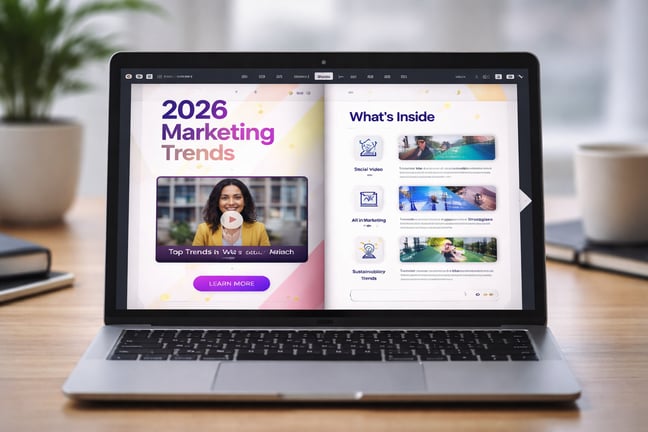
At its heart, an online flipbook maker is a tool that breathes life into your static PDF files, turning them into interactive digital publications with a realistic page-flipping effect. It takes a flat, one-dimensional document and transforms it into a rich experience, complete with embedded media and powerful analytics that a standard PDF just can't offer.
Moving Beyond Static PDFs with Flipbook Makers
Think about your most critical content—that killer sales proposal, a new marketing brochure, or your annual company report. In PDF form, it’s like a photograph: flat and unchanging. Now, imagine that same content as a dynamic, moving video that pulls you in. That's the kind of leap you make when you move from a traditional PDF to an interactive flipbook.
For years, the PDF has been the go-to for sharing documents online. It's reliable, sure, but it has some serious blind spots. Sending a PDF is a bit like launching a message in a bottle; you toss it out there and just hope someone reads it. You’re left completely in the dark about whether it was ever opened, which pages were actually read, or if anyone clicked your call-to-action.
An online flipbook maker tackles these problems head-on, turning those lifeless documents into something truly immersive. Instead of that awkward, endless vertical scroll, your readers get a familiar and satisfying page-turning motion that just feels more professional and intuitive.
The Problem with Static Content
The limits of a static PDF become painfully obvious on mobile devices. We've all been there, pinching and zooming our way through tiny text on a phone screen. It’s a clunky experience that doesn't just frustrate your audience; it reflects poorly on your brand and can cause people to give up on your content altogether.
A standard PDF gives you almost zero insight into reader behavior. You might know it was downloaded, but that's it. You won't know how long someone lingered on the pricing page, where they lost interest, or which links they clicked. That's a huge black hole in your content strategy.
This lack of visibility is a massive missed opportunity, especially since modern marketing and sales are built on data. An online flipbook maker closes this gap by serving up rich analytics that show you exactly how your audience is engaging with every single page.
Embracing a Dynamic Experience
But flipbook technology isn't just about fixing the PDF's flaws; it’s about unlocking a whole new level of content engagement. The best platforms let you enrich your documents with features that grab and hold your reader's attention, turning passive consumption into an active, engaging experience.
Here are a few of the key transformations:
- From Static to Interactive: Instead of just text, you can embed a product demo video right on the page, add clickable links that guide readers to a specific landing page, or use pop-up images for extra detail without cluttering the layout.
- From Clunky to Mobile-Optimized: Flipbooks are built to be responsive. Your content will look polished and read beautifully on any device, from a wide desktop monitor to a small smartphone screen.
- From Anonymous to Actionable: Finally, you can get deep insights into what’s working. Track views, session times, link clicks, and even see which parts of a page are getting the most attention.
In a world where everyone is drowning in content, delivering a better experience is how you win. Using an online flipbook maker isn’t a novelty anymore—it’s a strategic move for B2B teams that want to stand out, prove their content’s ROI, and connect with their audience on a much deeper level. For a closer look, you can learn more about creating interactive digital publications in our detailed guide.
So, What’s the Big Deal? It’s More Than Just a Prettier PDF

Relying on PDFs for important business documents is like sending a message in a bottle. You spend all this time crafting the perfect message, launch it into the digital ocean, and then… what? You’re left hoping it washes up on the right shore, but you never really know if it was opened, read, or just ignored. An online flipbook maker completely changes that game. It takes your content from being a passive, disconnected file and turns it into an active asset that works for you.
The real value goes way beyond just looking sharper than a standard PDF. It's about fundamentally shifting the relationship between your content and your audience. This is where your documents stop being a cost center and start generating tangible, measurable results that actually move the needle.
By embedding things like videos or forms directly into your documents, you’re not just presenting information—you’re creating an experience. That product brochure is no longer just a brochure; it’s a guided tour. A dense white paper becomes a lead-gen machine. It's a completely different ballgame.
From Static Pages to Interactive Experiences
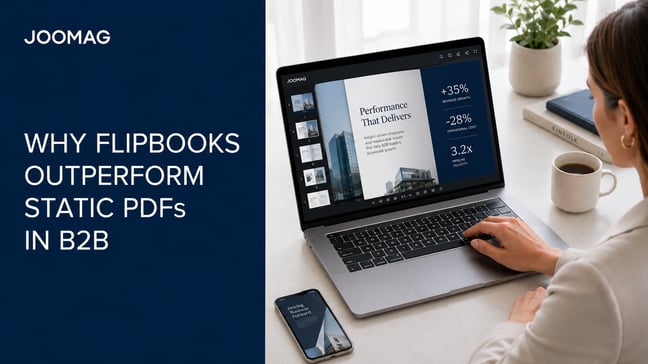
The first thing you’ll notice is the huge spike in reader engagement. When content is interactive, people simply spend more time with it. Instead of just scanning text, they're clicking, watching, and exploring. That extra "dwell time" is a massive signal of interest and a go-to metric for proving your content is hitting the mark.
Turning a static file into an interactive experience gives your audience reasons to stick around, dig deeper, and actually connect with your message. In a world jam-packed with distractions, holding someone’s attention is everything.
For any B2B company, this has real-world consequences. A prospect who watches a case study video inside your proposal is way more invested than someone who just skims the text. An employee who actually interacts with a training module in a digital handbook is far more likely to remember what they learned. These little interactions add up to a much stronger, more memorable brand impression.
A Polished, Professional Mobile Experience
Let's be honest, the mobile experience with PDFs is just plain bad. That constant pinch-and-zoom dance you have to do to read tiny text on a small screen is frustrating, and frankly, it looks unprofessional. It creates friction and often causes people to give up before they even get to the good stuff.
A quality online flipbook maker puts an end to that nonsense by making sure your content is fully responsive. That means it automatically adjusts to look great on any screen, from a huge desktop monitor to a tiny smartphone.
- No More Pinch-and-Zoom: Text is always crisp and readable, and images scale perfectly. Navigation is smooth and intuitive.
- Brand Consistency: Your content looks polished and professional on every single device, reinforcing your brand’s commitment to quality.
- Engagement on the Go: A seamless mobile experience means your audience can connect with your content wherever they are, whether that's at their desk or on the train.
Joomag’s Article View automatically extracts content from your flipbook and converts it into responsive HTML articles, delivering a seamless, mobile-optimized reading experience.
Turning Content into Business Intelligence
This is where things get really interesting. Traditional PDFs are a total black box. You send it out, and you have zero clue what happens next. A modern online flipbook maker like Joomag smashes that black box open, turning it into a dashboard of business intelligence you can actually use.
You can finally get answers to the big questions:
- Who is actually reading my content? By using unique links or email gates, you can track engagement down to the individual.
- What parts are resonating? Page-level analytics show you exactly where people are spending their time and, just as importantly, where they’re dropping off.
- Are my CTAs doing their job? You can measure every single click on every link, button, and video to see what’s truly driving action.
For sales and marketing teams, this kind of data is gold. A sales rep can see if a prospect opened their proposal and which pages they lingered on, paving the way for a smarter, more relevant follow-up call. A marketer can A/B test two versions of a catalog to see which one sends more traffic to product pages. The industry is quickly moving past simple download counts and toward conversion-focused metrics, and as a result, flipbook platforms are now seen as full-fledged marketing channels. You can read more about how flipbook software is evolving beyond basic viewing on paperturn.com. This intelligence transforms your content from a simple expense into a powerful engine for qualifying leads and sharpening your entire strategy.
When you start looking for an online flipbook maker, it’s easy to get overwhelmed. So many platforms seem to promise the same thing. But here’s the reality: not all of them are built the same. The real difference between a simple PDF converter and a true content experience platform comes down to the features—the ones that actually help you create, share, and measure your content in a meaningful way.
To get past the marketing fluff, you have to know what functionality drives real business value. A top-tier flipbook maker goes way beyond a fancy page-turning animation. It should be a complete toolkit built for the demands of modern marketing, sales, and internal communications.
Let’s dig into the essential features you absolutely should be looking for.
Immersive Interactivity And Design Control
At its heart, a flipbook is about turning a flat, static document into a living, breathing experience. This all starts with an editor that’s powerful enough to create stunning content but simple enough for anyone on your team to use—not just the graphic designers.
You need a platform with a rich library of interactive elements. And it’s non-negotiable that you can simply drag and drop these features right onto your publication’s pages without touching a single line of code.
Key interactive features should include:
- Video and GIF Embedding: Bring your content to life by dropping in product demos, customer testimonials, or even just fun animated GIFs. It’s so much more impactful than linking out to another website.
- Clickable Links and Pop-ups: You can guide your reader’s journey with hotspots and buttons that link to specific landing pages. Or, use pop-up images and text boxes to add extra info without cluttering your design.
- In-document Lead Forms: This is a game-changer. You can turn your content into a lead generation tool by embedding a form directly inside your brochure or white paper. Capture that contact info right when your reader is most engaged.
An intuitive editor is what empowers your team to produce professional-looking materials fast. To see what this looks like in practice, you can explore what’s possible with a modern online editor that empowers non-designers.
Advanced Distribution And Content Accessibility
Creating a fantastic flipbook is only half the job. You also have to get it in front of the right people, wherever they are. A top-notch online flipbook maker gives you flexible, omnichannel distribution options that are worlds away from just a simple shareable link.
The best platforms treat your flipbook not as an isolated file, but as a central content asset that can be seamlessly integrated across all your marketing channels.
So what does effective distribution look like?
- Direct Linking and Email Sharing: Generate unique, trackable links you can share anywhere—email, social media, or direct messages.
- Website and Blog Embedding: Easily embed your flipbook right onto any webpage. Let it live natively inside your brand’s digital home.
- Content Hub Creation: Organize all your publications into a branded, central library that your audience can browse and explore.
This multi-channel approach guarantees your content gets the maximum reach and impact. You’re no longer just sending email attachments; you’re building an integrated content experience.
Granular Analytics And Performance Tracking
This is where a quality online flipbook maker truly leaves the static PDF in the dust. A PDF is a black box—once you send it, you have no idea what happens. A flipbook, on the other hand, should be a source of rich business intelligence.
Metrics like total "views" just don’t cut it anymore. You need deep, actionable data. For example, knowing someone opened your proposal is one thing. But knowing they spent five minutes on the pricing page? That’s a powerful sales signal you can act on.
Here’s the kind of data a top platform must provide:
- Individual Reader Tracking: By sending unique links or using an email gate, you can see exactly who is reading your content and follow their entire journey through the document.
- Page-Level Engagement: Find out which pages capture attention, where readers tend to drop off, and precisely how long they spend on each section. This data is priceless for optimizing future content.
- Click and Interaction Heatmaps: Get a visual map of exactly where people are clicking and interacting on a page. It’s the best way to see which videos, links, and pop-ups are most effective.
Robust Security And Brand Governance
When you’re sharing sensitive information—like sales proposals, internal financial reports, or pre-launch marketing materials—security is everything. A professional online flipbook maker has to offer serious security controls to protect your intellectual property and make sure only the right people have access.
At the same time, it needs to give you the tools to maintain perfect brand consistency across every single publication, no matter who on your team is creating it. This means having features that let you lock down branded templates and centralize your assets.
Essential security and governance features to look for are:
- Password Protection: A basic but absolutely critical feature for locking down individual documents.
- Access Control and SSO: For enterprise-level needs, look for single sign-on (SSO) integration and the ability to restrict access by user roles or even IP addresses.
- Branded Templates and Viewers: Lock in brand consistency by creating pre-approved templates and customizing the flipbook viewer with your company’s logo and colors.
By focusing on these four key areas—interactivity, distribution, analytics, and security—you’ll be able to choose an online flipbook maker that does more than just create pretty documents. You'll have a strategic tool that actively helps your business grow.
How Flipbooks Drive Growth in B2B Use Cases
Theory is one thing, but the real magic happens when you see how an online flipbook maker solves actual business problems. In the B2B world, we measure success by the number of leads in the pipeline, the deals we close, and how connected our employees feel. Flipbooks aren’t just a prettier way to show a document; they are a workhorse for hitting these critical goals.
Let's get practical and look at where interactive flipbooks become game-changers. From marketing and sales to the often-overlooked world of internal comms, the applications turn static files into assets that genuinely drive growth. This isn't just a niche trend, either. The global market for flipbook software was valued at a whopping USD 720 million in 2024 and is expected to climb to USD 2.1 billion by 2033. You can dig into the numbers yourself in DataHorizzon Research's market analysis.
Supercharging Demand Generation Efforts
Picture this: your marketing team just poured weeks into a killer research report. The old way? Stick it behind a landing page and hope the downloaded PDF doesn’t just gather digital dust. Sure, you get an email address, but that's where the story ends. You have no clue if they read past the first page, what parts they cared about, or if your main points even hit home.
Now, imagine that same report as an interactive flipbook. The difference is night and day.
- Capture Leads Inside the Story: Forget the separate landing page. You can pop a lead capture form right on page three, just after the executive summary has them hooked. You’re catching them at their moment of highest interest.
- Get Data You Can Actually Use: Your team sees that a new lead just spent four minutes on the "Industry Benchmarks" chapter and clicked the link to a case study. That’s not just a contact; that’s a red-hot lead showing clear buying intent.
- Embed Your Next Step: As the report wraps up, a video from your lead analyst plays, followed by a big, bold button to "Book a Demo" right on the last page. You're turning curiosity into a sales conversation on the spot.
With a flipbook, a white paper stops being just a top-of-funnel magnet and becomes a middle-of-funnel lead qualification machine. It gives marketing the rich engagement data needed to score leads and pass high-quality opportunities to sales.
This data-first approach lets you be so much smarter with your lead nurturing. You can build segments based on the content people actually engaged with and send follow-ups that speak directly to what they care about. For more on this, check out our guide on using interactive content for demand generation and start filling your pipeline.
Accelerating Sales Cycles with Dynamic Enablement
A sales team's most precious resource is time. Every minute spent chasing a cold lead or fumbling through a clunky proposal is a direct hit to the bottom line. An online flipbook maker gives reps dynamic assets that not only shorten the sales cycle but also create a far more personal and impressive buying experience.
Think about a sales exec putting together a proposal for a major account. Instead of emailing a 30-page PDF attachment that might get lost or ignored, they send a single, trackable flipbook link.
Example Scenario: A Sales Proposal That Actually Sells
- A Personal Touch: The rep records a quick intro video and puts it on the cover page, greeting the prospect by name and recapping why their solution is a perfect fit.
- Pricing That Makes Sense: The pricing page isn't just a static table. It's interactive. The prospect can click different packages to see what's included, making complex options easy to understand.
- Real-Time Buying Signals: The moment the prospect opens the proposal, the rep gets a notification. They can see the prospect is spending a lot of time on the ROI calculator page—the perfect cue for a well-timed follow-up call to seal the deal.
This approach transforms a one-way document dump into a genuine conversation. The rep gets invaluable intel on what the prospect is focused on and can proactively address questions or concerns before they even come up.
Enhancing Corporate and Internal Communications
Good communication is the glue that holds a company together. But let's be honest, the old ways—emailing PDF newsletters or burying the employee handbook on some forgotten corner of the intranet—just don't work anymore. Important updates get missed, and HR and comms teams are left wondering if anyone even saw their message.
Flipbooks change internal communications from a monologue to a measurable, engaging dialogue.
- Onboarding That Wows: A new hire handbook becomes an interactive welcome experience, complete with videos from the leadership team, clickable links to benefits portals, and short quizzes to confirm they’ve understood key company policies.
- Newsletters People Actually Read: Corporate comms can finally see which articles in the quarterly newsletter were the most popular. This means they can stop guessing and start creating content that truly resonates with employees.
- Training That Sticks: An updated training manual can include step-by-step video tutorials and interactive diagrams right within the pages, boosting knowledge retention and cutting down on repetitive support questions.
By using an online flipbook maker, companies can ensure compliance, boost morale, and get confirmation that critical messages aren't just being sent—they're being received and understood.
How to Choose and Implement Your Flipbook Maker
Okay, so you're sold on the idea. But how do you actually pick the right online flipbook maker and get it running without derailing your entire quarter?
Moving from concept to reality can feel like a huge leap. The key is to break it down. You’re not just buying a tool; you’re choosing a partner that fits your business goals, makes life easier for your team, and delivers a clear return on your investment. A little planning up front will give you the confidence to make the right call and see results fast.
A Practical Evaluation Framework
Before you get lost in a sea of features, start by shortlisting two or three vendors. Then, run them through this simple four-point check. A truly great online flipbook maker won’t just be good at one of these—it will excel at all four.
- Ease of Use: Is the platform actually intuitive? You need something your marketing or sales team can jump into and use without needing a design degree or weeks of training. A clunky interface is the fastest way to kill adoption.
- Conversion and Quality: Does the platform keep your content looking sharp? Text should be crisp and images clear, even when a reader zooms in. Just as important, does it have built-in tools like lead forms to turn those engaged readers into real, actionable leads?
- Depth of Analytics: Forget simple view counts. You need to go deeper. Look for page-level engagement data, click tracking, and ideally, individual reader analytics. This is the kind of intelligence that arms your sales and marketing teams to make smarter decisions.
- Integration and Security: How will this tool plug into your current tech stack? Check for must-have CRM integrations and solid security options like password protection or SSO to keep your sensitive content safe.
This framework helps you cut through the marketing noise and find a solution that will actually work for your business.
Your Four-Step Implementation Roadmap
Once you've picked your platform, resist the urge to do everything at once. A phased rollout is the secret to building momentum and ensuring a smooth launch.
- Launch a Pilot Project: Start small but smart. Pick one high-impact project, like transforming a key case study or a popular product brochure into an interactive flipbook. This gives a small team a low-risk way to learn the ropes.
- Define Success Metrics: Before you even start, decide what winning looks like. Is it a 25% lift in reader engagement time compared to the static PDF? Or maybe hitting a specific number of new leads from an embedded form? Clear goals make it easy to prove the value.
- Train and Evangelize: Use the wins from your pilot to get the rest of the team excited. Show them what's possible and how this new tool makes their jobs easier and more effective. Nothing gets buy-in faster than seeing real results.
- Scale and Govern: Once you have a proven success story, it's time to scale up. This is when you build out your governance. Create branded templates, set up a central content hub for all your publications, and define user roles to keep everything consistent and on-brand.
This flow chart shows just how versatile a flipbook can be across different B2B teams and their core projects.

As you can see, flipbooks are a workhorse asset, driving results from the first touchpoint in lead generation all the way through sales enablement and internal comms. The growing market for these tools reflects just how useful they’ve become.
The U.S. flipbook software market is projected to be valued at USD 367.5 million in 2025 and is expected to grow to USD 571.6 million by 2032. Subscription-based models are dominant, holding an estimated 68.22% market share, which highlights the industry's shift toward ongoing service and support.
Interestingly, even with the big push to digital, offline distribution still holds a significant 54.12% market share. This is often driven by legitimate concerns over data security and compliance in certain industries. You can explore the data in more detail in the U.S. flipbook software market findings from Coherent Market Insights.
This just goes to show how critical it is to choose a platform with flexible and secure distribution options. By following this structured approach, you'll ensure your chosen online flipbook maker becomes an essential part of your growth strategy, not just another piece of software.
Your Questions About Online Flipbook Makers Answered
Thinking about using an online flipbook maker? You probably have some questions. It’s a big decision, and getting clear answers is the only way to choose the right tool for the job.
We get it. That's why we’ve put together this straightforward Q&A to cover the most common things people ask, helping you move forward with confidence.
How Much Does An Online Flipbook Maker Typically Cost?
This is the big one, and the honest answer is: it varies. The price for an online flipbook maker really depends on the features you need and how you plan to use it.
For individuals or small teams just dipping their toes in, you can find basic plans for around $30 to $50 per month. These usually handle simple PDF-to-flipbook conversions and give you standard sharing options.
But for most businesses, the real power comes from the more advanced features. Business and enterprise plans can range from a few hundred to several thousand dollars a month. These unlock deep analytics, serious security protocols like Single Sign-On (SSO), full branding control, and API access for custom integrations.
Rather than focusing solely on the price tag, a smarter approach is to evaluate the potential return on investment. Consider the value you gain from deeper audience engagement, actionable sales intelligence, and more efficient content workflows.
Most of the top-tier providers, including Joomag, run on a subscription model. This is actually a good thing—it means you're always getting continuous updates, support, and access to the newest features as they roll out.
Is It Difficult to Turn a PDF Into a Flipbook?
Not at all. This is a common worry, but modern platforms are built for business users—not developers or designers. The whole point is to empower marketing, sales, and comms teams to create incredible content without needing a technical background.
The process is surprisingly simple:
- Upload Your PDF: Just drag and drop your existing PDF file into the software.
- Automatic Conversion: The platform instantly converts your static document into a flipbook, complete with that slick page-turning effect.
- Enhance and Enrich: This is the fun part. You use an intuitive editor to drag and drop interactive elements right onto the pages.
Here's where you can embed videos, add links that send people to landing pages, or even insert pop-up forms to capture leads on the spot. No coding required. The whole experience is designed to be fast, letting you transform a boring PDF into a fully interactive asset in minutes.
Can I Track Exactly Who Reads My Flipbooks?
Yes—and this is arguably the biggest game-changer when you compare a flipbook to a standard PDF. But how deep you can go with tracking really depends on the platform.
Some basic tools might only give you high-level, anonymous data like the total number of views. It’s a start, but it won’t give you the intelligence you need for sharp sales and marketing.
This is where advanced platforms shine. By sending your flipbook through unique, trackable links or gating it with an email form, you unlock a treasure trove of individual reader data. You can:
- Identify Specific Readers: See exactly which of your contacts opened and read your document.
- Trace the User Journey: Know which pages they looked at, how long they stayed on each one, and which videos or links they clicked.
- Pinpoint Engagement: Understand exactly where a reader was most interested and where their attention might have started to fade.
For business teams, this kind of granular data is gold. It means a salesperson can have a much smarter conversation with a prospect because they know the person spent five minutes on the pricing page. It means a marketer can segment their audience based on what content they consumed and send them more of what they love.
Are Flipbooks Good For SEO?
They absolutely can be, but this is a massive point of difference between platforms. You have to choose wisely. The best online flipbook makers are specifically built with search engine optimization in mind.
Here’s the key: when a platform renders your content as HTML5, it allows search engine crawlers like Googlebot to actually read and index the text inside your publication. This is a huge win. It means all that valuable content locked away in your reports and catalogs can start showing up in search results, driving organic traffic right to you.
When you’re looking at different tools, always check that they use this HTML5-based functionality. A great online flipbook maker will also let you customize the important SEO details for every publication you create, like:
- Page titles
- Meta descriptions
- Custom URL slugs
On the flip side, be very careful with platforms that just stick your flipbook in a non-indexable iFrame or display it as a bunch of flat images. That approach makes your content totally invisible to search engines, and you’ll miss out on a massive opportunity to attract a new audience.
Ready to see how a true content experience platform can transform your documents into lead-generating, sales-accelerating assets? With Joomag, you can create, distribute, and track interactive content at scale. Discover the Joomag difference today.