.png?width=44&height=44&name=joomag%20favicon-blue%20(2).png)
At its core, a flipbook is an interactive online version of a traditional print document. But in 2026, it’s much more than a digital page-turner. It’s a smarter, more engaging content experience that helps businesses turn static PDFs into assets that drive attention, improve accessibility, and generate measurable results.
So, What Exactly Is a Digital Flipbook?
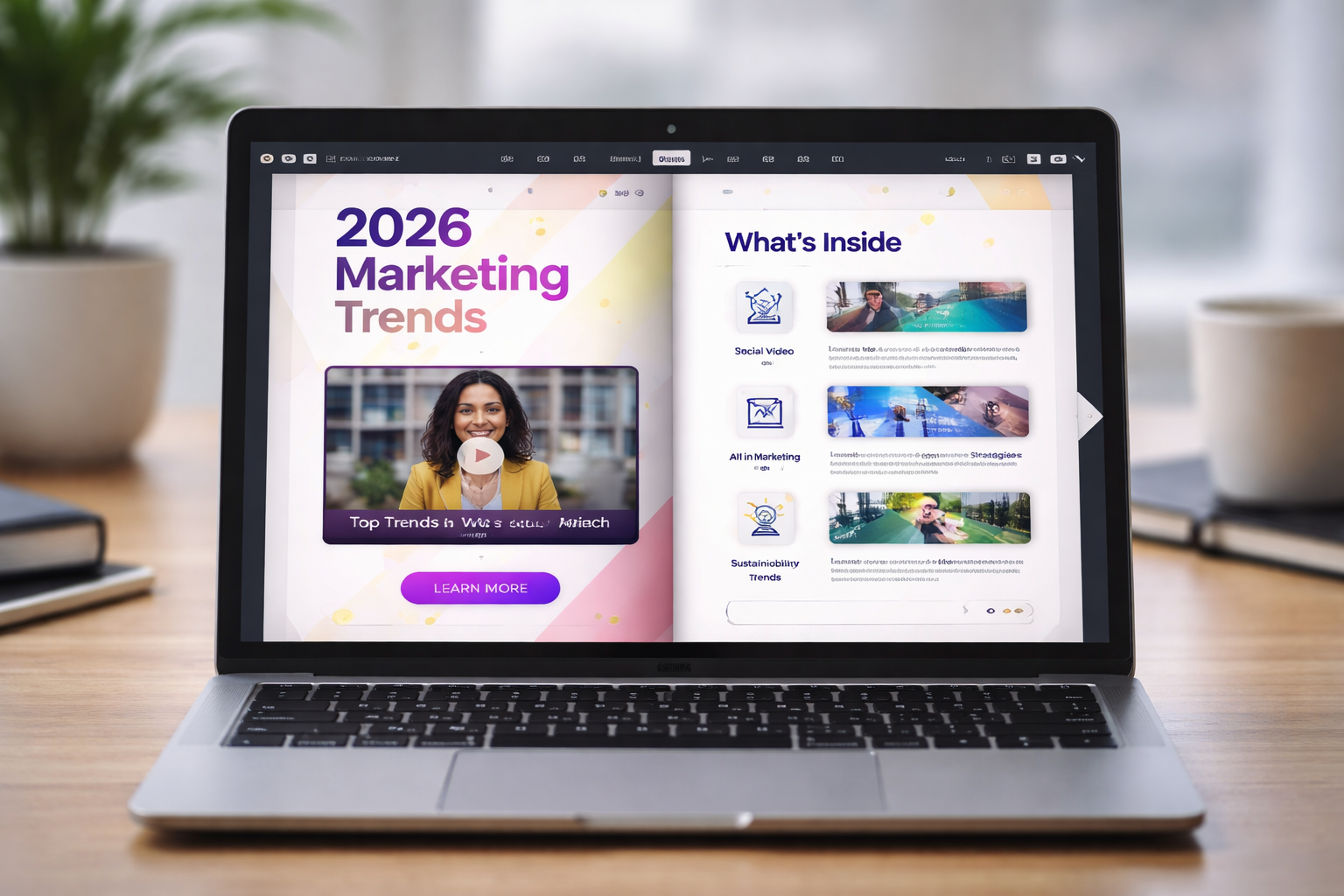
The idea of a flipbook has been around for more than 150 years. What started as a sequence of images that created the illusion of motion has evolved into a modern digital format for business communication.
Today’s digital flipbooks combine the structure and visual appeal of print with the flexibility of digital. They allow businesses to preserve the look of beautifully designed content while adding interactive layers that make it more useful, more discoverable, and far more effective across devices.
The Modern Flipbook Is More Than a Viewer
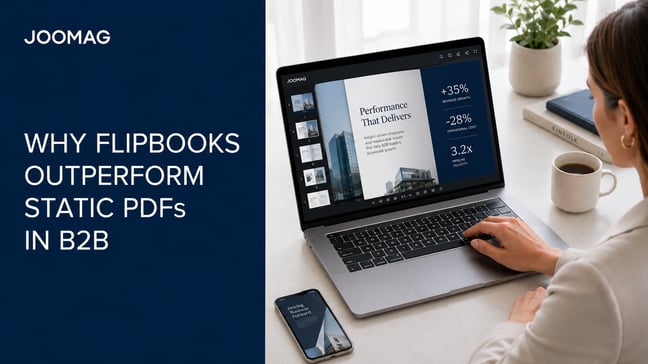
A digital flipbook gives readers a far better experience than a static PDF. Instead of forcing them to pinch, zoom, and scroll through a rigid document, it presents content in a polished, intuitive interface designed for modern screens.
But today’s best flipbook experiences go beyond design alone. With platforms like Joomag, businesses can also transform PDFs into responsive HTML content, making publications easier to read on mobile, more accessible, and better suited for SEO. This means your content is no longer trapped inside a static file — it becomes easier to consume, easier to find, and easier to repurpose.
That shift matters because content performance today depends on more than appearance. It depends on usability, reach, and the ability to adapt content into multiple formats for different audiences.
From Static File to Interactive Content Experience
A modern flipbook turns passive documents into interactive experiences. Instead of simply displaying pages, it allows you to embed rich elements directly into the content, including:
- Videos and GIFs to demonstrate products, explain ideas, or add visual storytelling
- Clickable links and CTAs to guide readers to landing pages, websites, or booking flows
- Interactive forms and surveys to capture leads and collect feedback without taking users away from the content
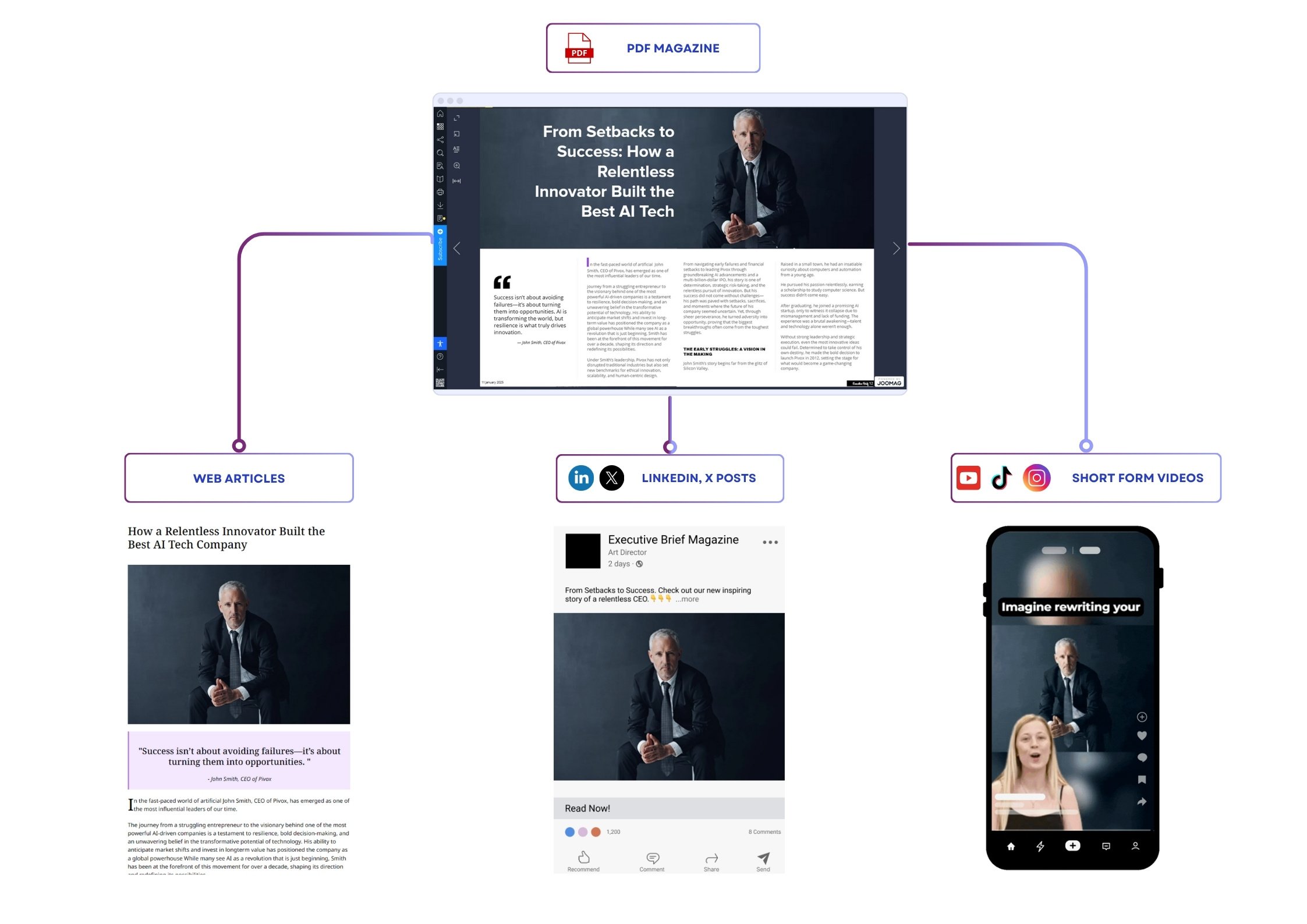
And with Joomag, the value extends even further. Businesses can also turn publication content into short-form videos using Video Shorts, making it easy to repurpose long-form PDFs, articles, reports, or magazines into bite-sized assets for social media, campaigns, or internal communications. Instead of creating new content from scratch, teams can extend the life and reach of existing materials.
This makes a flipbook more than a reading format. It becomes a central content asset that supports engagement, distribution, and reuse.
Why Businesses Need to Move Beyond Static PDFs
For years, the PDF has been the default format for digital documents. It’s familiar, convenient, and widely supported. But in a digital environment shaped by mobile usage, audience expectations, and performance metrics, static PDFs increasingly fall short.
They create friction on smaller screens, limit discoverability, and offer almost no insight into how content is actually being consumed.
The Limitations of Static PDFs
Relying on PDFs creates real business challenges:
- Poor mobile readability that forces users to zoom and scroll
- Little to no engagement insight beyond opens or downloads
- No direct path to action from the document itself
- Limited discoverability when the content remains locked inside a file
In short, PDFs were built for document sharing, not for digital content performance.
The Flipbook as a Smarter Alternative
A modern flipbook solves these problems by turning static files into engaging, trackable experiences. It preserves the design quality of the original document while making the content more interactive, accessible, and measurable.
With Joomag, that experience becomes even stronger through:
- A professional, branded viewer
- Responsive PDF-to-HTML reading experiences
- Embedded interactive elements
- Repurposing into Video Shorts
- Intelligent analytics that go far beyond page views
This means businesses are no longer just publishing documents. They are creating adaptable content experiences that work across channels and formats.
Static PDF vs Interactive Flipbook
Here’s how the difference plays out in practice:
| Feature | Static PDF | Interactive Flipbook |
|---|---|---|
| User Experience | Clunky on mobile, requires zooming | Smooth, screen-friendly reading experience |
| Interactivity | Basic links only | Videos, forms, pop-ups, CTAs |
| Discoverability | Limited SEO value | Better visibility through HTML-based formats |
| Repurposing | Stays in one format | Can be turned into short-form videos and multi-channel assets |
| Analytics | Minimal tracking | Detailed engagement insights |
| Brand Experience | Generic document feel | Custom-branded content experience |
How Different Teams Use Flipbooks
A flipbook is not just a publishing format. It solves practical problems across departments.
Marketing Teams Turn Content Into Multi-Use Assets
For marketers, one of the biggest challenges is getting more value from every piece of content they create. A white paper, brochure, or report may take weeks to produce, yet once it’s shared as a PDF, it often becomes difficult to track and even harder to reuse.
With an interactive flipbook, that same content becomes more versatile. Marketers can add videos, lead forms, and embedded CTAs directly into the publication. And with Joomag’s Video Shorts, they can also turn key sections into short-form videos for social campaigns, awareness efforts, or follow-up sequences.
This helps marketing teams do more with the same content investment — improving both performance and efficiency.
Sales Teams Gain Better Visibility Into Buyer Interest
Sending a proposal as a PDF offers almost no insight into what happens next. Sales reps rarely know if the document was opened, which pages were reviewed, or what caught the prospect’s attention.
A trackable flipbook changes that. Sales teams can see how prospects engage with proposals, presentations, and case studies — and with smarter tools like Joomag’s AI Analytics Agent, they can go beyond raw metrics to understand what patterns and engagement signals actually mean.
Instead of manually digging through performance data, teams can quickly identify which content is resonating, which sections are being ignored, and where interest appears strongest. That leads to more informed follow-ups and better-timed conversations.
Publishers Expand Reach and Revenue Potential
For publishers, digital reading experience is everything. If content is hard to read on mobile or locked inside a format that search engines can’t fully interpret, audience growth becomes more difficult.
Joomag helps publishers address this by turning PDFs into more accessible reading experiences, including HTML-based article and viewer formats that improve mobile readability and support discoverability. Publishers can preserve high-design layouts while also offering more flexible ways to consume content.
And when combined with Video Shorts, a single magazine or article can fuel additional promotional assets that help attract readers across more channels.
HR and Internal Communications Improve Accessibility
Internal documents are often important, but not always engaging. Policies, handbooks, onboarding guides, and internal reports can easily go unread when they are delivered as long, static PDFs.
Interactive flipbooks make this content easier to navigate and more engaging to consume. Better still, converting PDFs into responsive HTML-style reading experiences helps employees access content more comfortably on mobile devices or laptops, without the usual friction of PDF viewing.
For internal teams, this means information becomes easier to reach, easier to understand, and easier to act on.
A Smarter Flipbook Workflow
Creating a flipbook today is no longer just about uploading a file and adding a page-turn effect. The best workflow includes four connected stages:
1. Upload and Enhance
Start with your PDF and turn it into a digital publication. Add videos, CTAs, links, forms, and other interactive elements to increase engagement.
2. Improve Accessibility and Reading Experience
Instead of stopping at a fixed digital replica, modern platforms like Joomag can also turn PDF content into responsive HTML-style experiences that are easier to read across devices and more useful for SEO and accessibility.
3. Distribute Across Channels
Share the publication through a single link, embed it on your website, or repurpose parts of it into short-form videos for broader content distribution.

4. Measure and Optimize
Use detailed analytics to understand how readers engage — and with an AI Analytics Agent, surface key insights faster so teams can improve content performance without manually analyzing every metric.
Measuring What Matters With Better Analytics

One of the biggest advantages of a digital flipbook is its ability to generate meaningful engagement data. But raw dashboards alone are not always enough. Teams need help turning data into direction.
That’s where intelligent analytics become especially valuable.
Joomag’s AI Analytics Agent can help businesses interpret how readers interact with content by highlighting meaningful engagement patterns, not just numbers. That means less time spent reviewing reports and more time acting on insights.
Instead of asking:
- Did someone open this document?
You can start asking:
- Which sections kept attention the longest?
- What content drove action?
- Which format performed best?
- What should we improve next time?
That’s the difference between simply tracking content and actually learning from it.
Best Practices for High-Impact Flipbooks in 2026
To create flipbooks that truly perform, focus on the following:
Design for mobile first
Your audience will likely view your content on phones or smaller screens. Prioritize readability, simple navigation, and clean layouts.
Use interactivity with purpose
Videos, links, and forms should support the content, not distract from it.
Think beyond one format
Don’t stop at the publication itself. Use tools like Video Shorts to extend the reach of your content into new channels.
Make content easier to consume
Where possible, use PDF-to-HTML experiences that improve readability, accessibility, and discoverability.

Use analytics to improve over time
Look beyond open rates. Pay attention to how people actually move through the content, and use AI-powered insight to refine future pieces.
The Future of Flipbooks Is More Flexible, More Measurable, and More Useful
The flipbook is no longer just a better-looking PDF. It has become a smarter content format that helps businesses create richer experiences, improve accessibility, extend content into new formats, and learn more from every interaction.
With the right platform, a single document can become:
- an interactive reading experience,
- a responsive HTML asset,
- a source of engagement intelligence,
- and a set of short-form videos for broader promotion.
That is what makes flipbooks so relevant in 2026. They are not just a publishing tool. They are a content performance tool.
Why Joomag
Joomag helps businesses move beyond static PDFs by turning content into interactive, measurable, and reusable experiences. From PDF-to-HTML viewer options that improve readability and SEO, to Video Shorts that help repurpose long-form content into short-form video, to an AI Analytics Agent that helps teams understand engagement faster, Joomag gives modern teams more ways to create value from every publication.
Whether you’re building marketing collateral, sales proposals, digital magazines, or internal resources, Joomag helps you create content that works harder.
Book a demo to see how Joomag can help you turn static documents into interactive content experiences that engage, convert, and scale.